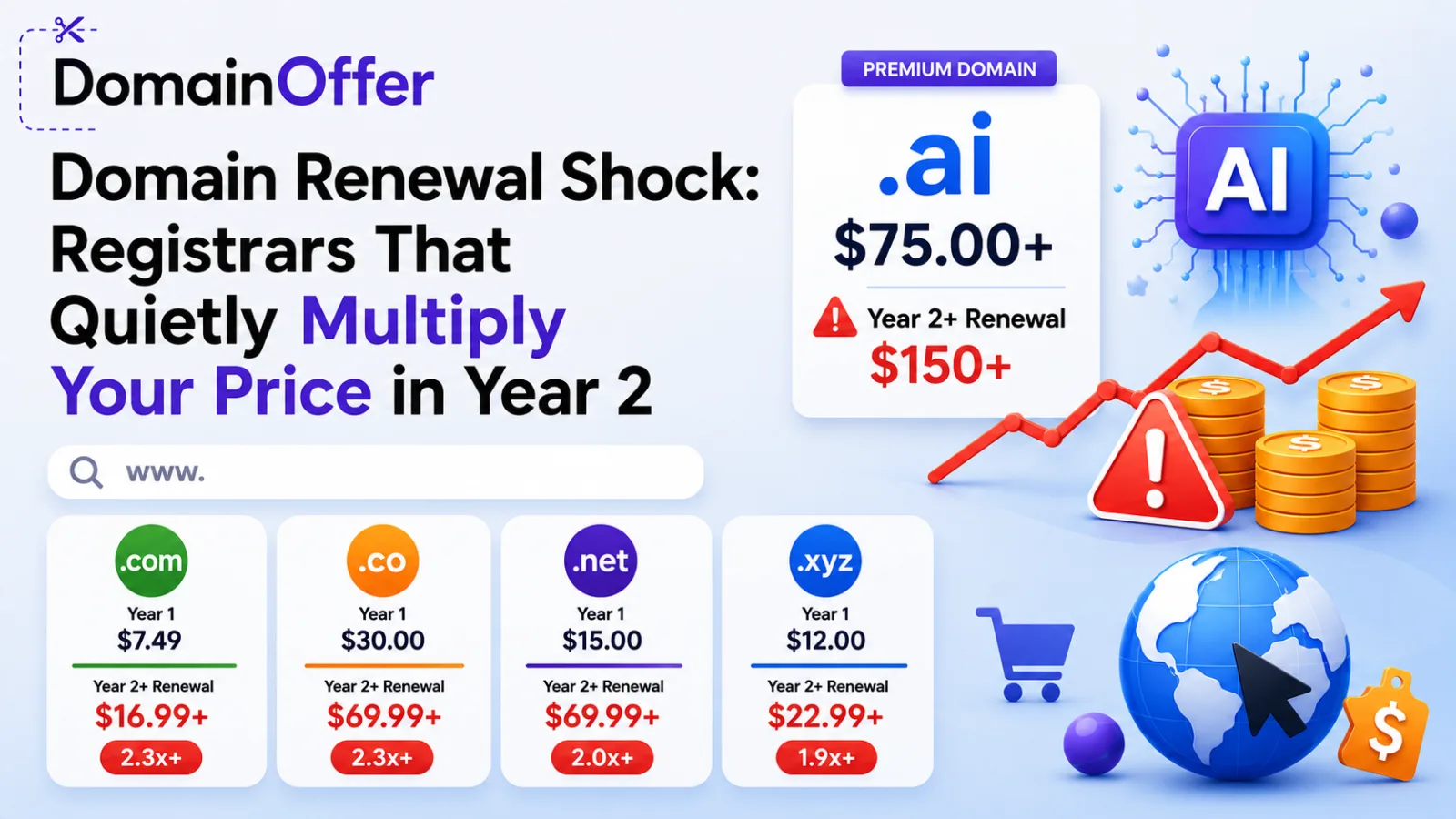
You registered a domain for $5. A year later the renewal hits your card for $33. Same domain, nothing changed, six times the price.
That's renewal shock. It's not a bug, it's the business model. The cheap first year pulls you in, the renewal is where they make their money, plus most people never check the second number until it's too late.
Here's who does it, how bad it gets, plus how to never get caught by it again.
How the trick works
A domain isn't a one-time purchase. It's a yearly bill. You pay to register it once, then you pay to renew it every year for as long as you own it.
Registrars know you'll rarely move a domain once it's tied to your site, email and brand. Switching feels like a hassle. So they price the first year low to win you, then bank on inertia keeping you through years of expensive renewals.
The first-year price is bait. The renewal is the real price. And the gap between them can be enormous.
The registrars with the biggest renewal jumps
Here's the same .com at five registrars, first year next to renewal, sorted by how hard the price climbs.
Domain.com is the worst offender we track. A $5 first year becomes a $32.99 renewal, a 6.6x jump. GoDaddy isn't far behind at $4.99 to $22.99, a 4.6x climb. Both look like bargains at checkout and quietly become some of the priciest domains you can own.
| Registrar | New (yr 1) | Renewal/yr | The jump |
|---|---|---|---|
| Domain.com | $5.00 | $32.99 | 6.6x |
| GoDaddy | $4.99 | $22.99 | 4.6x |
| Spaceship | $2.90 | $10.18 | 3.5x |
| Namecheap | $6.79 | $14.78 | 2.2x |
| Cloudean | $7.50 | $9.98 | 1.3x |
.com prices we track (May 2026). "The jump" is how many times the first-year price the renewal costs. A low first year means nothing if the renewal multiplies. Check the live renewal before you buy.
Notice the bottom of that table. Cloudean goes from $7.50 to $9.98, barely a 1.3x bump. A slightly higher first year that stays low is far cheaper over time than a $5 promo that renews at $33.
Why it keeps working
Three things keep renewal shock profitable.
First, the renewal price is buried. It's in small print under the big promo number, or on a separate pricing page, or not shown at all until year two. People see $5 and click.
Second, switching feels hard. Once a domain runs your site and email, moving it sounds risky, so people pay the renewal rather than deal with a transfer that actually takes ten minutes.
Third, auto-renew does the rest. The charge goes through before you even notice the amount. By the time you see the receipt, you've already paid.
How to never get caught again
Renewal shock is completely avoidable once you know to look for it.
The simplest defense is to compare the renewal, not the promo, before you buy. Our price comparison tool shows renewal prices alongside first-year prices, so you can spot a 6x trap before you fall into it.
Already stuck with a high renewal?
If you're staring at a $33 renewal notice, you're not trapped. Transferring a domain to a cheaper registrar usually adds a year at the new registrar's low price, so the move often pays for itself in year one.
You need the domain to be at least 60 days old and unlocked, then you grab an authorization code from your current registrar. The whole thing takes about ten minutes. Compare that to overpaying by $20 every year for the life of the domain.
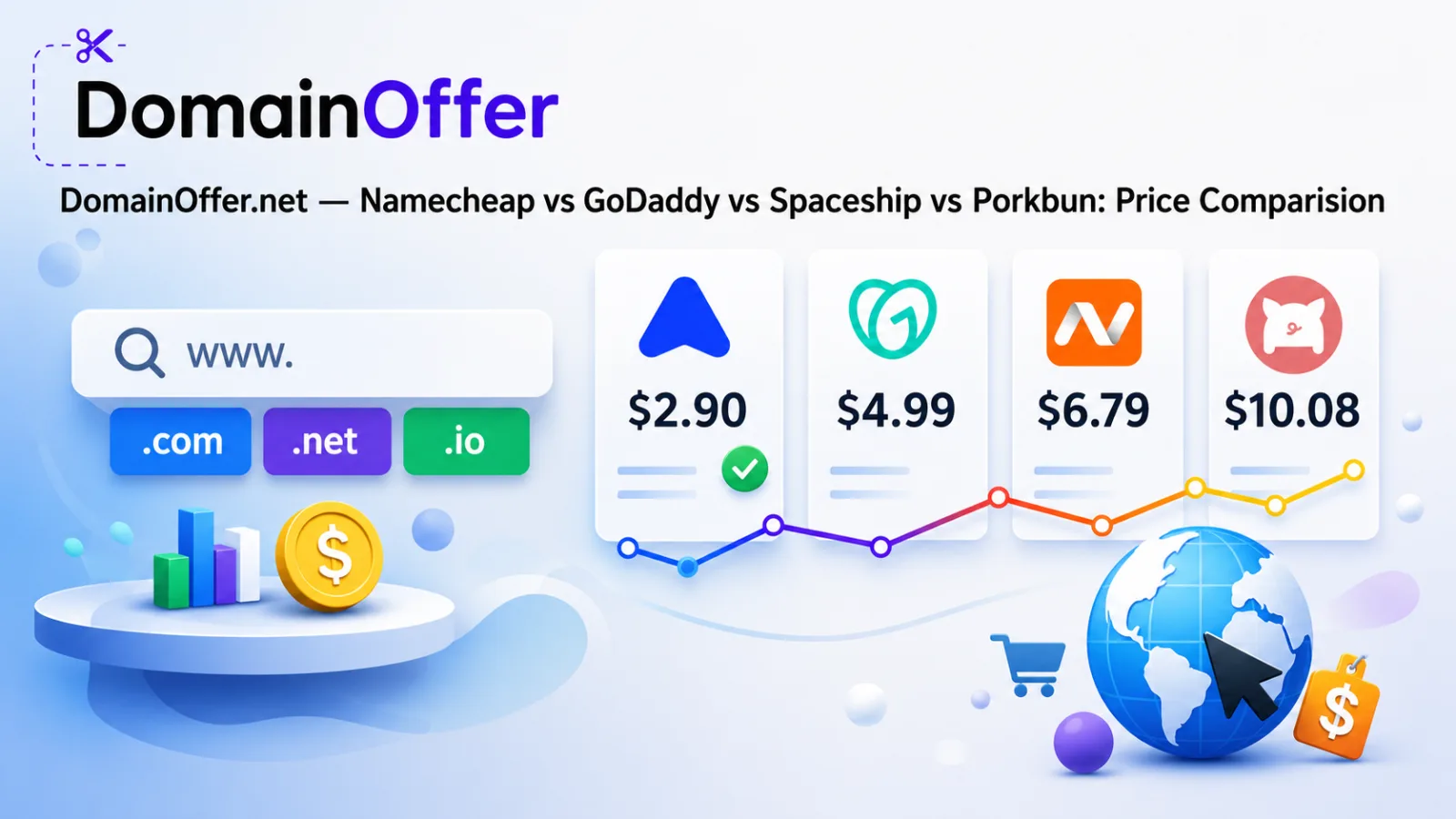
To see which registrars renew cheapest, check the cheapest .com registrars in 2026, or compare the big names head to head in our Namecheap vs GoDaddy vs Spaceship vs Porkbun breakdown.
The short version
Cheap first-year domains often renew at 4x to 6x the price. Domain.com jumps to $32.99 and GoDaddy to $22.99 on a .com that started around $5. The promo wins your signup, the renewal collects for years.
Always check the renewal before you buy. If you're already paying a high one, transfer out, it's quick and it usually saves money the same year. The cheapest first year is worthless if the renewal eats you alive.