Free domain. Two words that sound great until you read the fine print.
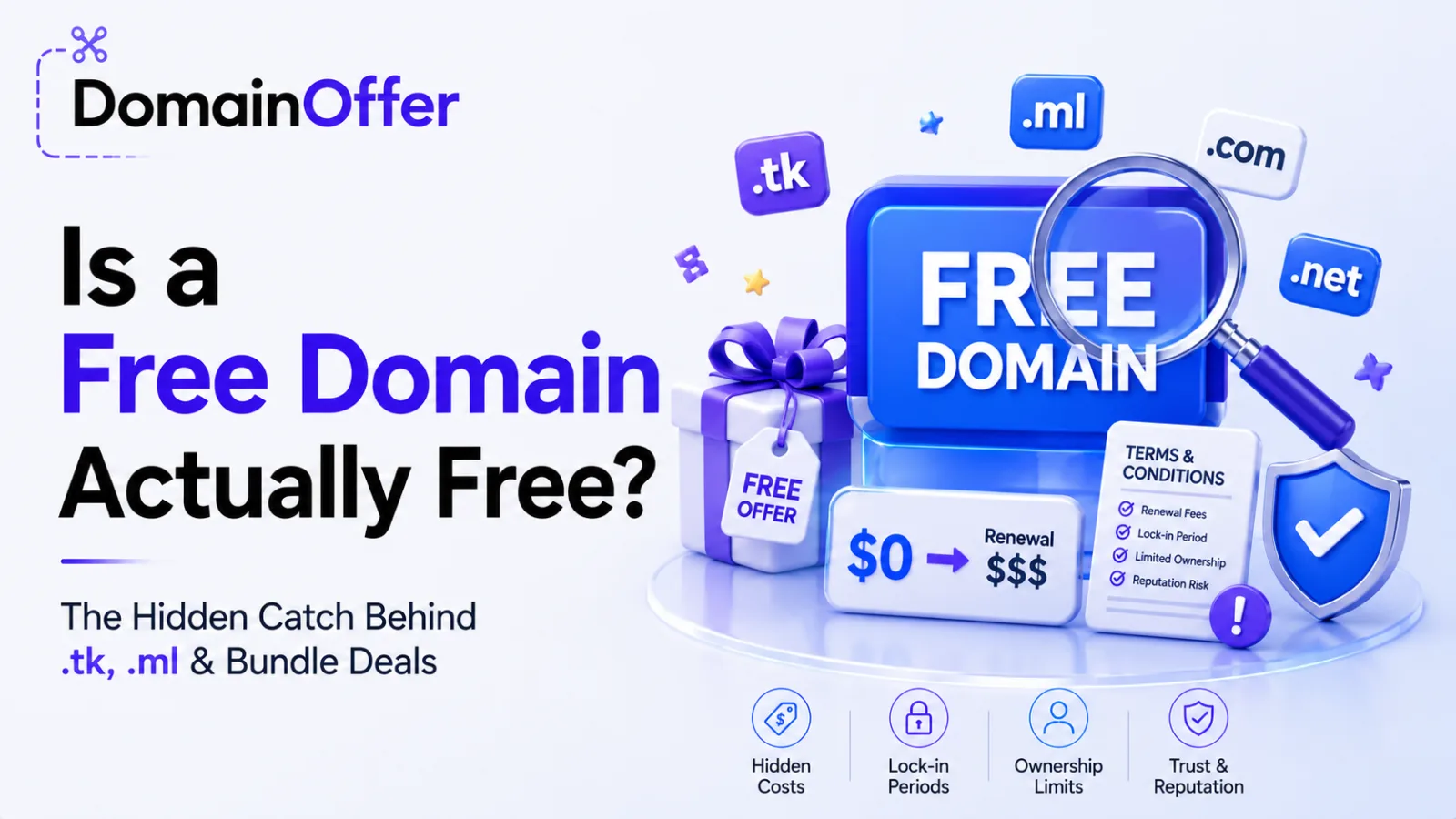
Sometimes free really is free. Often it's free the way a free puppy is free: no price tag, plenty of costs you didn't see coming. A renewal that spikes, a domain you don't actually own, a reputation that quietly tanks your search rankings.
So let's answer the real question. When a domain is free, what are you actually paying with? Here's the catch behind every kind of free domain, plus how to tell a safe one from a trap.
The honest answer: free always costs something
No registrar gives away domains out of kindness. A domain costs them money to register and maintain, so when it's free to you, the cost is recovered somewhere else.
Sometimes that's fine. A hosting bundle where you needed the hosting anyway is a fair trade. Sometimes it's not, like a free extension that gets your emails marked as spam. The trick is knowing which trade you're making before you make it.
| "Free" type | The catch | Do you own it? | Real cost |
|---|---|---|---|
| .tk / .ml (Freenom) | Shut down in 2024, gone | No, never did | Lost domains, spam reputation |
| Hosting bundle | Free year 1, renews higher | Yes (after lock) | Paid hosting + year-2 renewal |
| Builder subdomain | Platform name in your URL | No | Branding limits, can't transfer |
| Nonprofit free (DigitalPlat) | Limited TLDs, verification | Usage rights only | Time + lower trust |
| Email plan bundle | Tied to paid email | Yes | Monthly email fee |
Verified May 2026. "Free" almost always trades money for something else: a paid bundle, a lock-in, limited ownership, or weaker trust. The trick is knowing which trade you're making.
Every row trades money for something: a paid bundle, a lock-in, borrowed ownership, or weaker trust. None of these are automatically bad. They're just costs that don't show up on the price tag.
The .tk and .ml story: a free domain cautionary tale
If you've ever been told to grab a free .tk or .ml domain, that advice is years out of date. The reason why is the clearest warning in this whole topic.
Freenom gave away millions of free domains for two decades. Because they were free and anonymous, scammers flooded in, so the extensions became so associated with spam that search engines and email providers learned to distrust anything on them. Then Meta sued over the abuse, Freenom stopped new registrations in 2023, then by 2024 it exited the business entirely.
Everyone who built a site on a free .tk lost it. That's the worst-case version of the free domain catch: not just hidden costs, but the domain vanishing and taking your site with it. Any guide still recommending .tk or .ml in 2026 simply hasn't updated.
The bundle deal catch: free for a year, then what?
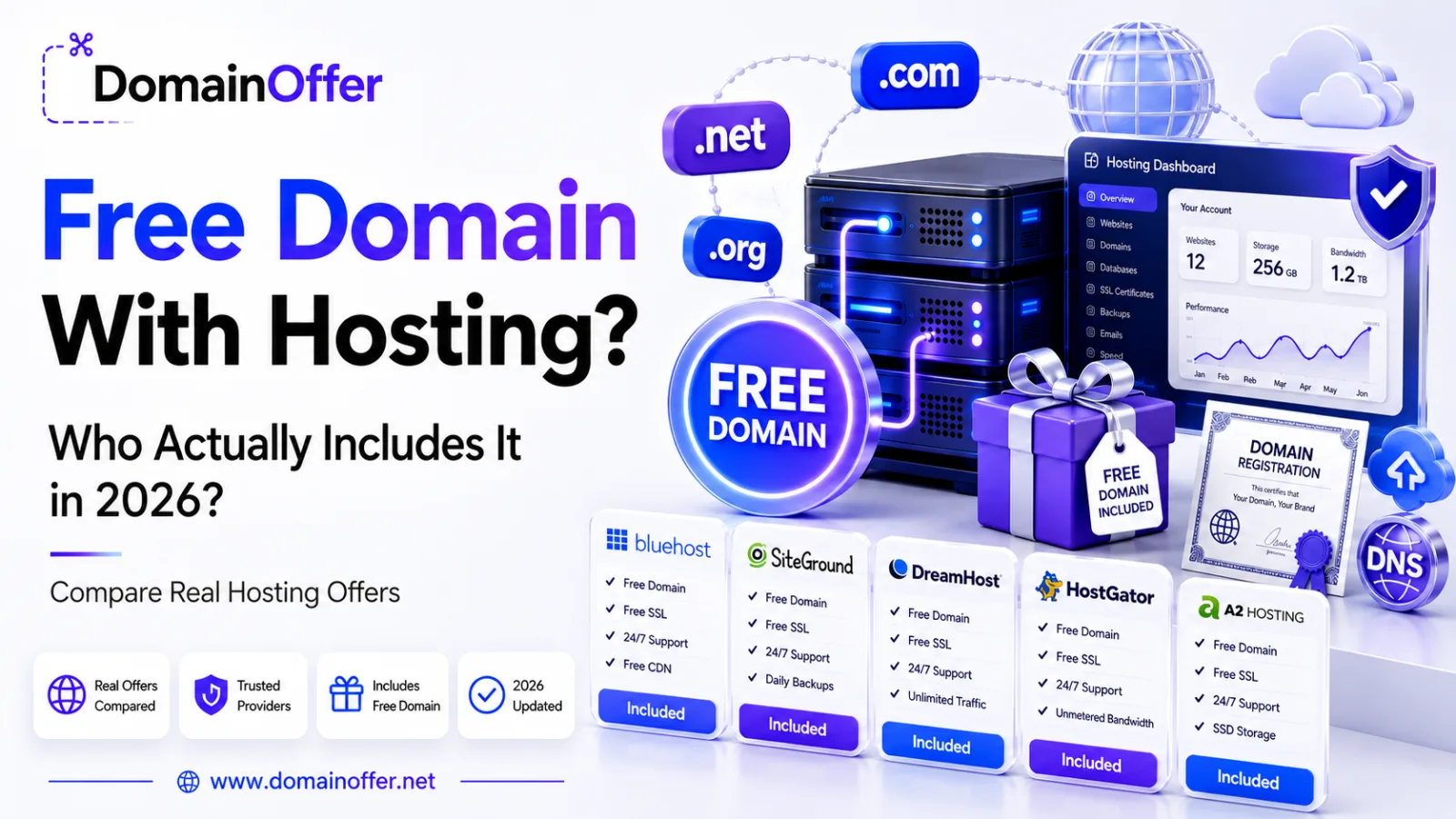
The modern version of “free” is the bundle. Buy hosting or email, get a free domain for the first year. This one is mostly legit, the domain is real and you usually own it after a short lock period.
The catch is year two. The domain renews at the standard rate, with some registrars renewing far higher than others. A free first year on a domain that renews at $33 is a worse deal than paying a few dollars for one that renews at $10. That's the exact trap we break down in domain renewal shock.
The other catch is the bundle itself. If the only reason you're buying hosting is to get the free domain, you're paying for hosting you may not need. Add up the real total before you call it free.
How to tell a safe free domain from a trap
Not every free domain is a trap. Before you accept one, run it through these five questions.
One practical move: before you trust any domain or the registrar behind it, look it up. A WHOIS checker shows who controls a domain and how it's registered, which helps you spot a flaky provider before you build on their offer.
When a free domain is genuinely fine
None of this means avoid free entirely. For the right job, free is the smart choice.
- Learning or testing? A free subdomain is perfect. No reason to pay while you experiment.
- A student? Free student-pack domains are a real, owned domain at no cost. Take it.
- Need hosting anyway? A bundled free domain is a fair deal, just check the year-two renewal.
For the full list of legit ways to get one, see our guide on how to get a free domain name in 2026. And you can always check live, verified free promos on the free domain offers page.
When to skip free and just buy
If you're building a business, a store, or anything you want to grow, buy a real domain from day one. The trust, the ownership, plus the ability to move it are worth far more than saving a few dollars.
And a real domain barely costs more than free. New .com registrations start at a few dollars. If you need several, the bulk domain pricing guide shows how to keep the per-domain cost down at scale.
The short version
Is a free domain actually free? Rarely in full. You pay with a paid bundle, a renewal spike, limited ownership, or weaker trust. The old free .tk and .ml domains are gone for good, a reminder that free can vanish overnight.
Free is fine for learning, testing and students. For anything you want to keep and grow, buy a real domain. It costs a few dollars, you own it, plus it can't be pulled out from under you.